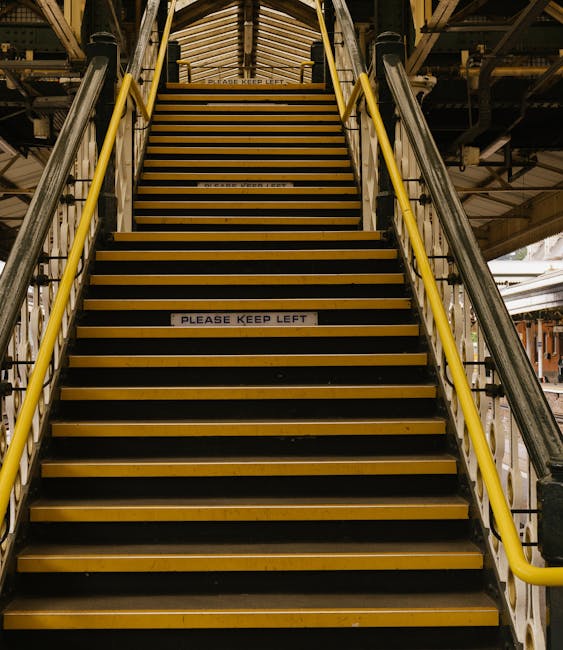
Cheap bulky rubbish collection Shoreditch stair access fees: what actually affects the price?
If you are trying to book cheap bulky rubbish collection Shoreditch stair access fees can make a bigger difference than most people expect. A quick flat clearance might look straightforward on paper, then reality shows up: three flights of stairs, a tight landing, a narrow front door, a parked van down the road, and a sofa that suddenly feels twice as heavy as it did in the photos. Sound familiar?
This guide breaks down how stair access fees work, why they matter in Shoreditch, and how to keep your collection affordable without cutting corners. You will also get practical tips on quoting, common mistakes, best practices, and a clear checklist you can use before you book. Let's face it, nobody wants surprise charges when the rubbish is already by the door.
Table of Contents
- Why cheap bulky rubbish collection in Shoreditch with stair access fees matters
- How stair access fees work in bulky rubbish collection
- Key benefits and practical advantages
- Who this is for and when it makes sense
- Step-by-step guidance
- Expert tips for better results
- Common mistakes to avoid
- Tools, resources and recommendations
- Law, compliance, standards, and best practice
- Options, methods, and comparison table
- Case study or real-world example
- Practical checklist
- Conclusion
- Frequently asked questions
Why cheap bulky rubbish collection in Shoreditch with stair access fees matters
Shoreditch is not a place where waste collection always plays nice. Many homes and flats are in converted buildings, older terraces, mansion blocks, or shared properties with awkward access. That means bulky waste removal is often less about the item itself and more about how hard it is to get the item out.
Stair access fees exist because labour changes depending on the building layout. A sofa on the ground floor is a very different job from a wardrobe on the fourth floor with no lift. The team may need extra time, more people, repeated trips, or more careful handling to avoid damage to walls, bannisters, and the item itself. In busy parts of East London, that effort matters.
For the customer, understanding this upfront is the difference between a fair quote and a frustrating one. You want a low price, of course, but you also want the price to be honest. Cheap should mean efficient and well planned, not vague and suspiciously bare-bones.
There is also a practical side. If you are clearing out before a move, handing back a tenancy, refurbishing a flat, or simply reclaiming a room, delays cost money and energy. Stair access fees can be annoying, but they also reflect the real shape of the job. When they are explained properly, they help you compare quotes like-for-like instead of comparing apples with, well, a wardrobe full of bricks.
Expert takeaway: the cheapest quote is only useful if it includes the access conditions that actually apply to your building. In Shoreditch, that usually means stairs, narrow hallways, and parking constraints all need to be declared early.
How cheap bulky rubbish collection Shoreditch stair access fees works
Most bulky rubbish collection services price jobs using a mix of volume, weight, item type, labour, and access. The stair access part is usually added when the removal team expects extra effort because the items need to be carried down steps, around corners, or through tight communal spaces.
In simple terms, the company is assessing how long the job will take and how difficult it will be to complete safely. If access is easy, the team can work quickly. If it is not, they may need to allow more time on site, protect surfaces, or bring additional staff. That is what the fee is really covering.
What usually affects stair access charges
- Number of flights: more stairs usually means more time and more effort.
- Width of stairwells: narrow stairs can make carrying bulky items awkward or require two-person handling.
- Turning space: tight corners, low ceilings, and awkward landings slow everything down.
- Lift availability: a lift can reduce costs, but only if the item fits and can be used safely.
- Item size and shape: a heavy chest of drawers is one thing; a mattress and frame combo is another.
- Parking distance: if the van cannot stop nearby, carrying distance adds to the workload.
- Disassembly needs: some bulky waste must be broken down before removal, which can alter the quote.
To be fair, not every stair fee is large. Sometimes it is a modest add-on. But if you do not mention the stairs until the team arrives, that modest amount can become the source of a very unmodest conversation.
Why Shoreditch jobs can be more complex than they look
Shoreditch often combines older housing stock with busy streets, limited parking, and shared entrances. A job near a top-floor flat above shops can be very different from a garden-level property on a quieter side street. Even short carry distances can be tricky when vans cannot stay close to the entrance.
That is why photos help so much. A few clear pictures of the items, stairs, landing, hallway, and front entrance can make pricing much more accurate. A short description is good, but photos reduce guesswork. And guesswork is where surprise charges like to hide.
Key benefits and practical advantages
If you get the stair access part right from the start, you get more than a lower bill. You also get a smoother collection and less stress on the day. That matters more than people think, especially if you are working to a deadline.
Better budgeting
When the fee structure is clear, you can compare providers properly and avoid hidden extras. You will know whether the quote is based on item count, van space, labour, or access complexity. That helps you plan your budget without crossing your fingers.
Faster collections
Accurate access details mean the crew arrives prepared. If they know there are stairs, they can allocate the right team and the right equipment. That usually speeds things up, which is exactly what you want if the job has to be done before work starts or before the end of a tenancy.
Less risk of damage
Bulky items moving through tight spaces can scuff walls, chip paintwork, and damage bannisters if the removal is rushed or underplanned. Good planning reduces that risk. Nobody wants to explain a scraped hallway to a landlord on a Monday morning.
Cleaner communication
A well-quoted job tends to run more professionally. You know what is included, what is not, and whether the removal team expects extra lifting or dismantling. That kind of clarity is worth a lot. It removes the awkwardness before it has a chance to appear.
More environmentally sensible disposal
When bulky waste is separated and handled properly, reusable items can be diverted from landfill where appropriate, and recyclable materials can be sorted more effectively. If you are clearing furniture, old appliances, or mixed household items, a careful service is simply the better option.
If you are also clearing out other items at the same time, a broader service such as waste clearance can sometimes be a neater fit than booking several small jobs. Likewise, for single large items, furniture disposal may be the more practical route.
Who this is for and when it makes sense
This kind of collection is not just for people moving house. Honestly, it suits a lot of everyday situations.
- Tenants clearing a flat before check-out
- Landlords or agents dealing with abandoned items
- Homeowners replacing old furniture
- Students moving out of shared accommodation
- Small businesses clearing stockroom clutter
- People dealing with a room that has quietly become a storage zone
You may also need this service if you have no lift, limited parking, or items too bulky for standard household bins. In Shoreditch, that can include sofas, wardrobes, mattresses, broken shelving, office chairs, desk units, and mixed rubbish from a quick clear-out.
It can make sense when the items are too awkward to move yourself, when you do not have the time to break them down, or when you simply do not want the hassle. Truth be told, there is a point where lifting one more heavy cupboard stops being heroic and starts being a bad idea.
If the job is tied to a larger clear-out, you might also find related services useful, such as house clearance, flat clearance, or home clearance. Those options are often better when several bulky items need removing together.
Step-by-step guidance
If you want a cheap and fair quote, the process is usually simpler than people imagine. You just need to give the right information in the right order.
1. List everything that needs collecting
Write down each item, not just "bulky rubbish." A mattress, sofa, wardrobe, and broken table are priced differently from loose bags of waste. Separate furniture from mixed rubbish if you can.
2. Measure the main pieces
Approximate length, width, and height are usually enough. If the item has unusual dimensions or cannot be disassembled, mention that too.
3. Describe the access honestly
Say how many flights of stairs there are, whether there is a lift, and whether the staircase is narrow or shared. Mention any codes, gated entrances, or awkward parking. It does not need to be a novel. Just the facts.
4. Send photos if possible
Photos of the item, the route out, and the outside entrance help a lot. A picture of a tight stairwell tells a clearer story than three paragraphs ever could.
5. Ask what the stair fee includes
Ask whether the quote includes labour, parking issues, disassembly, and disposal. Some companies separate these; others bundle them. Either can be fine, as long as you know what you are paying for.
6. Check if the job can be done in one visit
If there are multiple floors or the item must be removed carefully, ask whether the team needs extra time or more than one operative. A one-visit collection is often the neatest and cheapest solution overall.
7. Book a time when access is easier
Morning may be calmer for parking. Late afternoon might suit some buildings better. If the street gets busy, a timing choice can make a real difference. Small thing, big effect.
8. Prepare the route before the team arrives
Move small objects out of the way, clear hallways, and make sure doors can open fully. That little bit of preparation helps the whole job run faster.
Expert tips for better results
These are the things that tend to separate a tidy, affordable collection from a messy one.
Be precise about "stairs"
One flight is not the same as four. If the property has split levels, mezzanines, or basement access, mention that clearly. Teams price from labour, and labour changes very quickly in stair-heavy buildings.
Do not hide damaged items inside a larger quote request
People sometimes think broken items are easier to price because they are smaller. Not always. Sharp edges, loose glass, or unstable frames can add handling time and safety risk. Say it as it is.
Ask whether dismantling is worth it
Sometimes taking apart a bed frame or wardrobe can reduce the removal cost. Other times the labour to dismantle it offsets the saving. Ask first. A minute of planning can save a fair bit of money.
Bundle similar waste together
If you have furniture, mixed household waste, and a few bags of clutter, let the provider know everything at once. Separate jobs can be more expensive than one well-organised collection.
Watch for parking realities
In Shoreditch, parking can be the hidden complication. If the van has to stop far away, the stair fee may not be the only labour consideration. It helps to describe the nearest safe stopping point rather than assuming the crew can "just park outside."
Use the right service for the job
A small one-off item might suit rubbish collection. A larger mixed load might suit rubbish removal or waste removal. The right label often helps the pricing make more sense.
One small human tip from experience: if you are unsure, send one message with everything in it. Half the time, the quote gets cleaner simply because the team can see the full picture instead of chasing details back and forth.
Common mistakes to avoid
Some mistakes are tiny but expensive. Others are just inconvenient. Either way, they are avoidable.
- Forgetting to mention stairs: this is the classic one, and it usually causes price changes on arrival.
- Underestimating item size: a "small wardrobe" can still be a large item once it reaches the stairwell.
- Not checking the route out: tight corners, low ceilings, or narrow doors can turn a quick job into a slow one.
- Assuming parking will be easy: it often is not, especially in central and east London streets.
- Mixing recyclable items with general rubbish without saying so: the load may need sorting, which affects price.
- Booking purely on headline price: if the quote looks too simple, it may be missing the access details that matter.
- Leaving loose items everywhere: the crew may have to spend time making the area safe before lifting anything.
A lot of these problems come from one thing: people trying to simplify the quote too much. That is understandable, but it can backfire. Clear details lead to cheaper, calmer jobs. Funny how that works.
Tools, resources and recommendations
You do not need fancy tools to get this right, just a few practical bits of information.
- Phone camera: take clear photos of the items and access route.
- Tape measure: rough dimensions help more than guesses.
- Simple notes app: keep a list of items, floor level, and building access details.
- Lift measurements if relevant: if there is a lift, check whether the item fits safely inside.
- Any building instructions: entry codes, concierge times, or delivery rules can matter.
If you are clearing a broader mix of items, these related services may also help you plan more efficiently: waste disposal, rubbish clearance, and waste collection. For bigger household projects, office clearance, garage clearance, and garden clearance can also be useful depending on what you are shifting.
Law, compliance, standards, and best practice
When bulky rubbish is collected in London, the main concerns are safe handling, lawful disposal, and responsible transfer of waste. You do not need to be an expert in waste regulation to book a collection, but it does help to know the basics.
Good practice means the waste should be removed by a provider who handles it responsibly and takes it to an appropriate disposal or processing route. If items are reusable or recyclable, they should be separated where possible. If you are clearing household junk, furniture, or office waste, ask sensible questions about what happens after collection.
From a customer point of view, the important thing is simple: do not hand waste to someone who cannot explain where it goes. Cheap is not useful if the waste is dumped somewhere it should not be. That is where trust matters most.
For residents and businesses in Shoreditch, it is also worth remembering that communal areas must be kept clear and safe. Do not block fire exits, hallways, or shared access points while waiting for collection. If items are being carried down stairs, ensure the route is as unobstructed as possible. Safety first, always. A scuffed wall is one thing; a trip hazard is another.
If the waste comes from a business, the expectations can be stricter. Business owners should be especially careful to use a provider that can handle commercial waste appropriately. For those situations, business waste can be the more relevant service page to review.
Options, methods, and comparison table
There are a few ways to deal with bulky waste in Shoreditch. The best choice depends on how much you have, how quickly it needs moving, and how awkward the access is.
| Option | Best for | Pros | Potential drawback |
|---|---|---|---|
| One-off bulky rubbish collection | A few large items or mixed bulky waste | Simple, quick, tailored to access | Can cost more per item than larger loads |
| Full flat or house clearance | Multiple rooms or a whole property | Efficient for bigger jobs, usually better value | More planning needed |
| Furniture-only removal | Sofas, wardrobes, beds, tables | Good for single large items | Not ideal for mixed rubbish |
| General waste removal | Loose waste, bags, assorted clutter | Flexible and practical | May need sorting if items are mixed |
| Business clearance | Office or commercial items | Useful for commercial premises | Requires clearer scheduling and access info |
If your item list is mostly furniture, sofa removal can be a good fit for one of the most common bulky jobs. If the project is more like a full reset of a property, waste clearance or home clearance may be a better overall match.
Case study or real-world example
Here is a realistic Shoreditch scenario. A renter in a top-floor flat needs an old sofa, a broken chest of drawers, and three bags of mixed household waste removed before checkout. The building has a narrow staircase, no lift, and parking close by is limited during the morning rush.
If they ask for a quote and simply say "one sofa and some rubbish," the provider has to guess. That guess may be too low, which means the final cost could change once the crew arrives. Not ideal. If instead they send photos, mention the fourth-floor walk-up, and explain the parking pressure, the quote is much more likely to be accurate.
In that sort of job, the stair access fee is not really a penalty. It is a reflection of time, labour, and the physical reality of the building. Once the customer understands that, the whole process feels less annoying and more fair. And the team can get on with the work instead of negotiating over details at the front door.
We have seen plenty of cases where a well-described stair job ended up being quicker and cheaper than expected because everything was prepared in advance. The opposite happens too. A vague request, a rushed collection, and suddenly everyone is sweating a bit on the landing. Not fun.
Practical checklist
Use this before you book. It keeps things clean and saves back-and-forth later.
- List every bulky item clearly
- Note how many floors the items need to come down
- Check whether there is a lift and if it is usable for the item
- Measure large items roughly
- Take photos of the items and stair access
- Mention narrow hallways, tight corners, or low ceilings
- Tell the provider about parking restrictions
- Ask whether dismantling is included or charged separately
- Confirm whether labour and disposal are part of the quote
- Clear the route before collection day
- Keep pets and children away from the moving path
- Have any entry codes or concierge details ready
- Ask what happens to reusable or recyclable items
Practical summary: the more accurate your access details, the more likely you are to get a cheap, honest, and smooth bulky rubbish collection. It really is that simple. Well, mostly.
Conclusion
Cheap bulky rubbish collection in Shoreditch is absolutely possible, but stair access fees are part of the real-world maths. Once you understand how they work, you can compare quotes properly, avoid surprise extras, and choose the right service for the job.
The best approach is straightforward: be honest about access, share photos, ask what is included, and book the right type of removal for the items you have. Do that, and the whole process becomes far less stressful. No drama, no last-minute haggling, just a clean space and one less thing on your mind.
If you are ready to clear bulky items from a flat, house, or business premises in Shoreditch, now is a good time to get a clear quote and plan the job properly.
Get a free quote today and see how much you can save.
Frequently Asked Questions
What does stair access fee mean in bulky rubbish collection?
A stair access fee is an extra charge that reflects the extra labour needed to carry bulky items up or down stairs, especially in buildings with no lift, narrow landings, or awkward turns.
Why are stair access fees common in Shoreditch?
Shoreditch has many flats, conversions, and older buildings where access is often tighter than in newer developments. That makes stair labour a normal part of pricing for bulky rubbish collection.
Can I avoid stair access fees completely?
Sometimes, if there is level access, a suitable lift, or the item can be collected from ground floor, the fee may not apply. But if stairs are involved, it is usually best to expect some labour-based adjustment.
How can I get a cheaper quote for bulky waste removal?
Give accurate details, send photos, list all items at once, and explain the access route clearly. If the provider knows the exact job, they can quote more efficiently and avoid padding for uncertainty.
Do lift access and stair access cost the same?
Not necessarily. A lift can reduce labour, but only if it is available, safe, and large enough for the item. Some jobs still need extra handling even when there is a lift.
Should I dismantle furniture before collection?
Sometimes yes, sometimes no. Dismantling can make carrying easier and cheaper, but only if the time spent taking it apart does not outweigh the saving. Ask before you start unscrewing everything in sight.
What if I do not know the exact number of floors?
Do your best and describe the layout honestly. Mention whether it is a basement, split-level flat, mezzanine, or top-floor walk-up. A clear description is usually enough for an accurate quote.
Can bulky rubbish be collected from a narrow staircase?
Often yes, but it depends on the item size and how tight the stairwell is. Very bulky items may need to be carried carefully, partially dismantled, or handled by a larger team.
Is it better to book furniture disposal or general rubbish collection?
If you mainly have sofas, wardrobes, beds, or other large household items, furniture disposal may be the better fit. If you have mixed waste as well, a broader rubbish collection or waste removal service might be more suitable.
What should I ask before confirming a booking?
Ask what is included in the quote, whether stair access changes the price, whether dismantling costs extra, how parking affects the job, and what happens to the collected waste afterwards.
What if the team arrives and access is harder than I described?
The quote may need to be adjusted if the actual access is significantly more difficult than expected. That is why accurate photos and clear details matter so much. It avoids awkward surprises for everyone.
Does cheap always mean poor service?
No, not at all. A cheap quote can be perfectly fair if the job is straightforward and the company has priced it accurately. The important thing is transparency, not just the headline number.